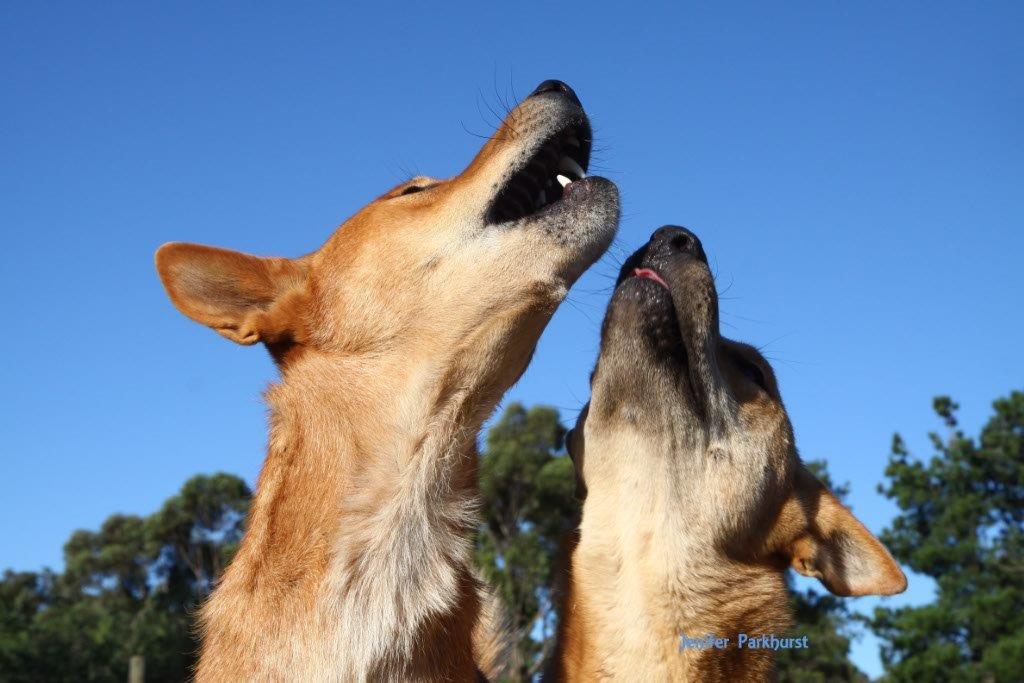
About Australian Dingoes.
The dingo (Canis lupus dingo) is a primitive dog that is now considered a native species in Australia.
Extant Australian populations comprise two distinct dingoes - 'ancestral' dingoes and ‘modern’ dingoes. The ‘ancestral’ dingo type refers to dingoes resembling the 'original' dingo type that was first described by European settlers in 1789.
The ‘modern’ dingo type refers to dingoes exhibiting additional pelt colours and behaviours resulting from introgression of domestic dog genes (hybridisation) over the past two centuries or so since European settlement of Australia.
The average size and shape of both dingo types is similar: shoulder height 570 mm, nose-tail length 1230 mm, weight 15 - 26 kg, pricked ears and bushy tails.
The major external difference is in pelt colour. The pelt colour of ‘ancestral’ dingoes is typically ginger but varies from sandy-yellow to red-ginger and is occasionally black-and-tan, white or black. ‘Modern’ dingoes predominantly comprise sable, brindle, patchy ginger-and-white and patchy black-and-white pelt colours. Most 'ancestral' dingoes and many ‘modern’ dingoes have white markings on the feet, tail tip and chest and some have black muzzles.
Both dingo types exhibit similar territorial, breeding and social behaviours in the wild and both types perform similar ecological, cultural and economic roles.
The dingo is an Australian icon and is considered to play a key role in Australian ecosystems.